
Demystifying the Springs: Why "Heavy" Isn't Always Harder
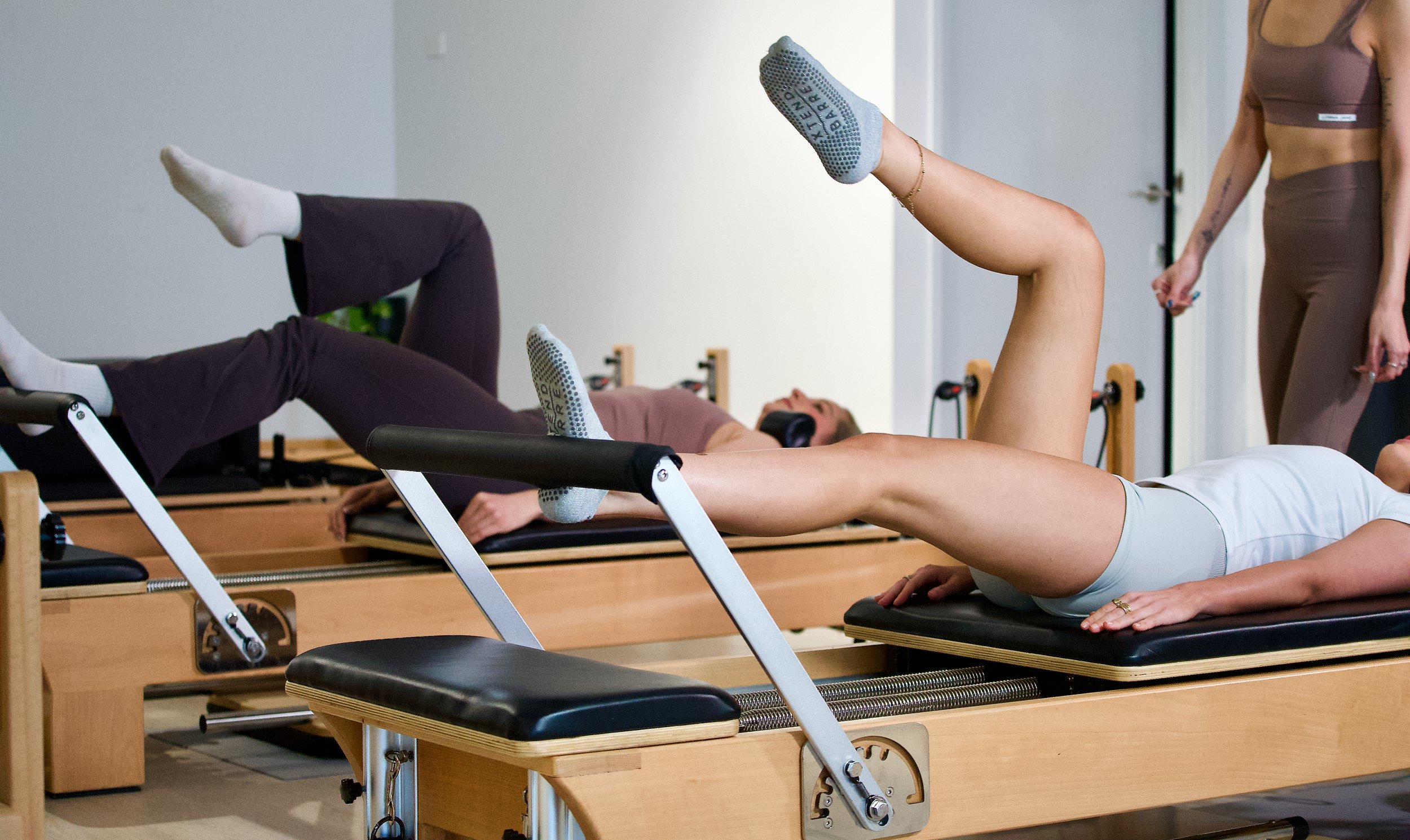
If you’ve ever stepped into a Reformer Pilates studio, you’ve likely looked at the row of colorful springs at the base of your carriage with a bit of mystery. Your instructor might call out, "One red and one green" or "Give me a single yellow" and suddenly the workout feels entirely different.
For beginners, it’s natural to assume that more springs (more resistance) equals a harder workout, much like adding plates to a barbell. But in Pilates, the springs are much more nuanced.
So how the springs actually work?
Unlike a traditional weight machine where the weight provides a constant downward force, Reformer springs provide linear elasticity. This means the further you stretch the spring, the more tension it creates.
In a Reformer setup, the springs act as both your resistance and your support system.
1. High Resistance (The "Heavy" Springs)
When you have multiple heavy springs attached, the carriage wants to stay "home" (closed).
The Challenge: It takes significant muscle power to push the carriage away.
The Benefit: It’s great for building "big muscle" strength in the legs and glutes (think footwork).
The Surprise: Heavy springs can actually make core work easier because the carriage is stable and supports your body weight.
2. Low Resistance (The "Light" Springs)
When you have only one light spring attached, the carriage becomes incredibly "touchy" and moves with the slightest breath.
The Challenge: You have to use your deep stabilizing muscles (your core and pelvic floor) to keep the carriage from flying open or slamming shut.
The Benefit: This is where the famous "Pilates lean" comes from—training those tiny muscles that hold your skeleton in place.
The Surprise: A light spring makes many exercises much harder because you have no "floor" to lean on.
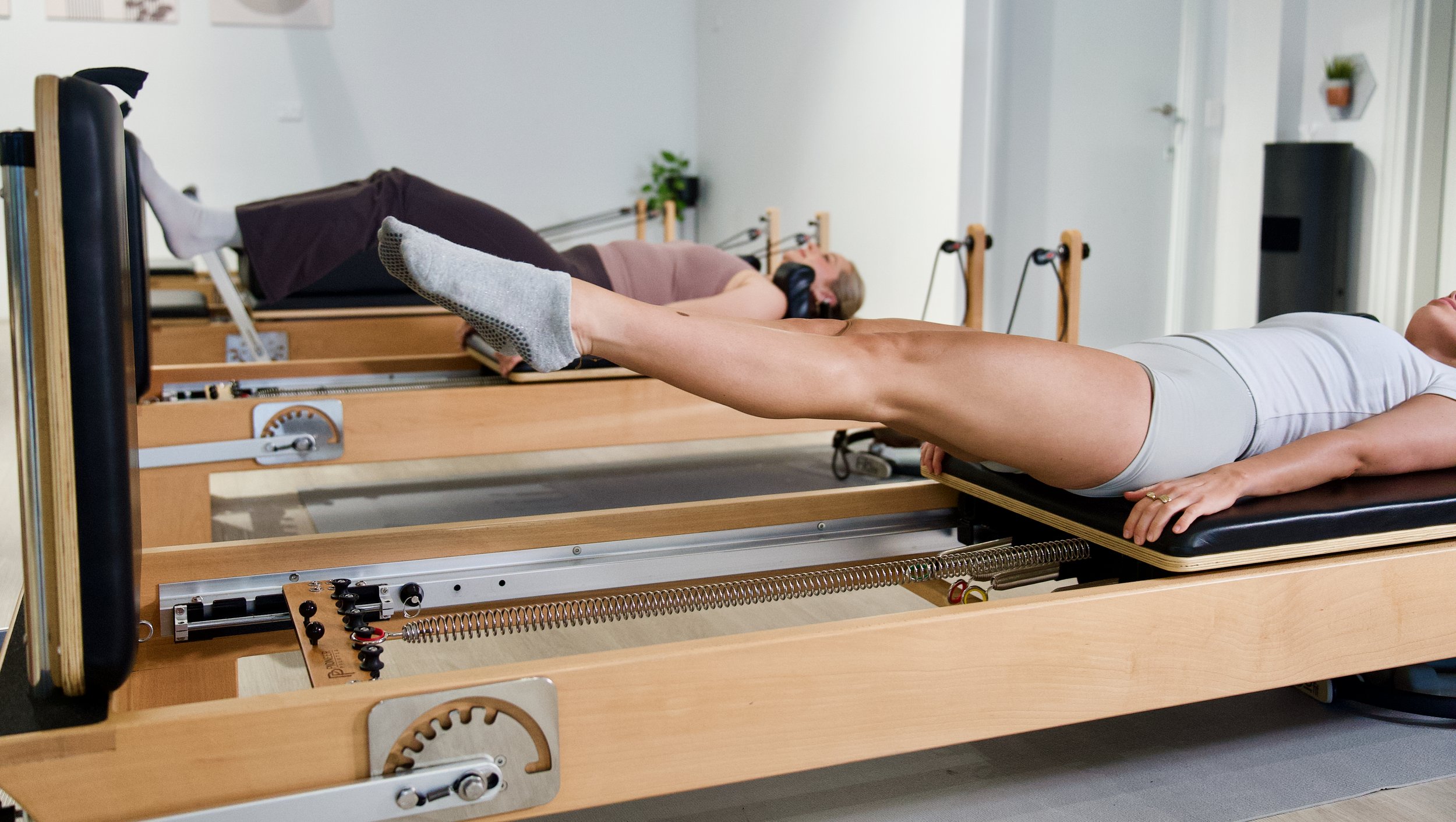
Why "Lighter" is often the real killer?
Take an exercise like The Knee Stretch or Side Splits.
On a heavy spring, the machine helps pull your legs back underneath you. You can almost "relax" into the return. But on a light spring? You have to manually squeeze your inner thighs and zip up your deep abdominals to control the carriage’s return. Without that tension, the carriage would simply slide away from you.
The Pilates Rule of Thumb: If the goal is athletic power, we go heavy. If the goal is stability and core control, we go light.
Next time your instructor tells you to "drop a spring," don't think they're giving you an easy break! They are likely asking you to stop relying on the machine’s tension and start relying on your own internal strength.
The magic of the Reformer isn't in how much weight you can move; it’s in how well you can control the movement against the tension.
Ready to find your balance?
Try our Intro offer and experience all the benefits of Reformer Pilates!